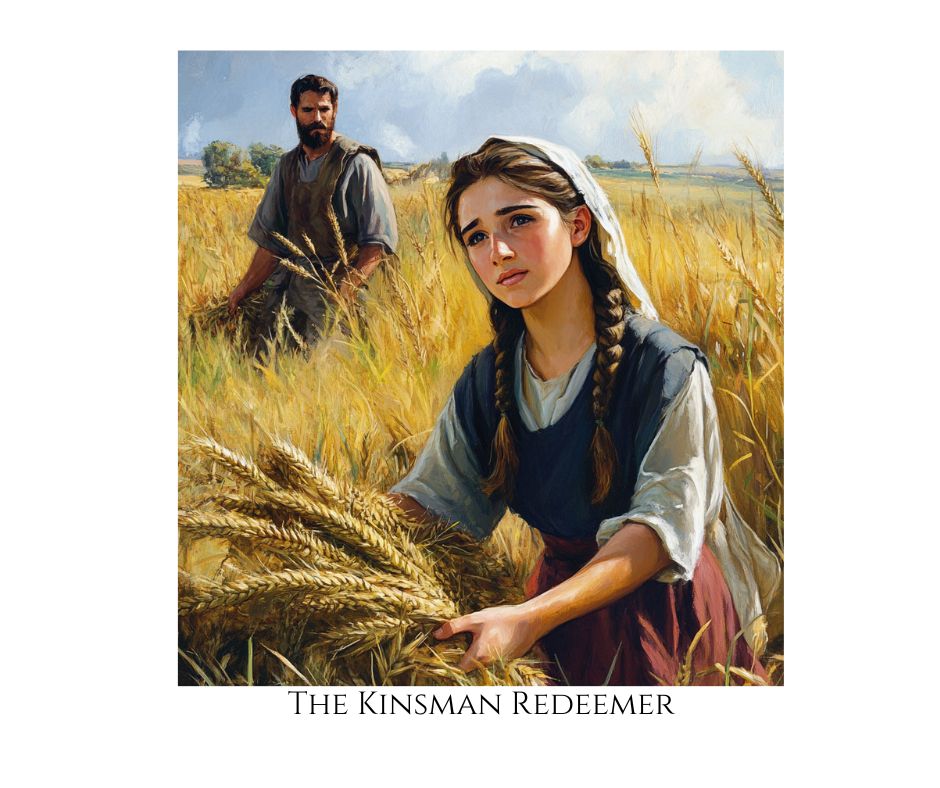
Redeemer
Yet as for me, I know that my Redeemer lives,
And at the last, He will take his stand on the earth.
Even after my skin is destroyed,
Yet from my flesh I will see God,
Whom I, on my part, shall behold for myself,
And whom my eyes will see, and not another. – Job 19:25-27
Job, who lived before Moses, knew of the Redeemer. In Genesis 3, Moses recorded the first details of our redemption generations after Job declared his certain hope of redemption.
And I will make enemies
Of you and the woman,
And of your offspring and her Descendant,
He shall bruise you on the head,
And you shall bruise Him on the heel. – Genesis 3:15
The Hebrew word for redeemer is go’el, and it means a close kinsman who acts as a redeemer. It’s described in Leviticus, the “law book.” I love how so many of God’s laws are about us taking care of others. What does He get out of this deal?
If a fellow countryman of yours becomes so poor he has to sell part of his property, then his nearest kinsman is to come and buy back what his relative has sold. – Leviticus 25:25
This compassionate yet dry commandment is beautifully illustrated in Ruth’s story. Ruth and Naomi were in dire straits, in debt and desperately in need of a kinsman redeemer. Boaz stepped in and married Ruth, redeeming Naomi’s land and restoring her husband’s line, doing for her what she could not do for herself.
Then the women said to Naomi, “Blessed is the Lord who has not left you without a redeemer today, and may his name become famous in Israel.” – Ruth 4:14
Where’s the type?
Sin left mankind with a debt we could not pay. Our only hope was a kinsman redeemer. But that redeemer had to be perfect, blameless, without sin. That’s why Jesus, fully God, had to be born as a human, fully man. From Genesis, the Beginning, the Father had a plan to send His Son to redeem our sin debt.
“For I am the LORD your God who takes hold of your right hand, Who says to you, ‘Do not fear, I will help you.’
“Do not fear, you worm Jacob, you people of Israel; I will help you,” declares the LORD, “and your Redeemer is the Holy One of Israel. – Isaiah 41:13-14
What a contrast between our God and any other religion. The others are all about being good enough. Christianity is the only one with a Savior who knows our weaknesses and makes a way for us, who redeems us because we can’t redeem ourselves.
What does He require? Faith. Because without faith, it’s impossible to please Him.
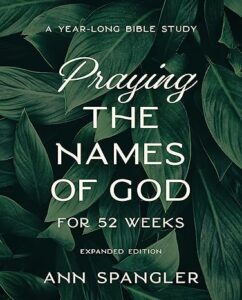 This year-long blog series is inspired by Ann Spangler’s Praying the Names of God for 52 Weeks




So much to glean from this. Never thought about it, but Job before Moses? Wow!
Yes! Of Job’s friends, Eliphaz was a Temanite, and Bildad was a Shuhite. Eliphaz was a son of Esau who had a son named Teman. Teman is a city in Edom. (Genesis 36) Shuah was a son of Abraham by Keturah (Genesis 25:1-2) My best guess is that Job was written while the sons of jacob were in Egypt.
Job is commonly considered the oldest book in the Bible. The content of Genesis predates Job, of course, but Moses recorded it after – during the wilderness wanderings.